
Put Your BEST Foot Forward
They carry us to every single destination we can imagine, from birth until we pass off this mortal coil. From a simple trip to the bathroom to the most fantastic reality we can imagine, our feet give us a world of service over a lifetime. FEET! That brilliantly designed anatomical form that allows us to traverse through space with ease.
Imagine having to travel 20 miles or more on a riding lawn mower to get to work. Seems ridiculous, right! Most people were never taught to use their feet. When you got up and starting walking as a toddler, your parents were just delighted that you did, and never considered that a person would need to be taught to use, of all things — feet! By and large, we take them for granted. Comfort, style and function appear to be the most common considerations in footwear. So long as our feet don’t hurt, we really don’t even think about them, save a pedicure and polish. The way feet generally get used is in a manner as ridiculous as using a riding lawn mower as your daily driver. And, your feet are one of the foundations of your body. How you use your feet will literally position you for easy forward motion over a life or lots of lower extremity issues as well as exacerbate postural issues all the way up to the skull.
We live in a world filled with lower extremity (LE) difficulties like hip issues, knee problems/injuries, bunions, overuse injuries, feet plagued with some kind of pain, … and so much more. Doctors of many disciplines and manufacturers of all kinds of gear offer a myriad of services and products to help us overcome a great number of LE issues. What no one is telling you though, is how correcting the use of your feet can solve most of these kinds of problems. It will take some time and effort on your part, but most are fixable. I’ve worked with LE issues of all kinds and I generally have people in a fraction of their normal pain levels within two weeks. And every single one of those people gets taught how to use their feet properly. Permanent rehabilitation without correcting the mechanics behind the motion is near impossible
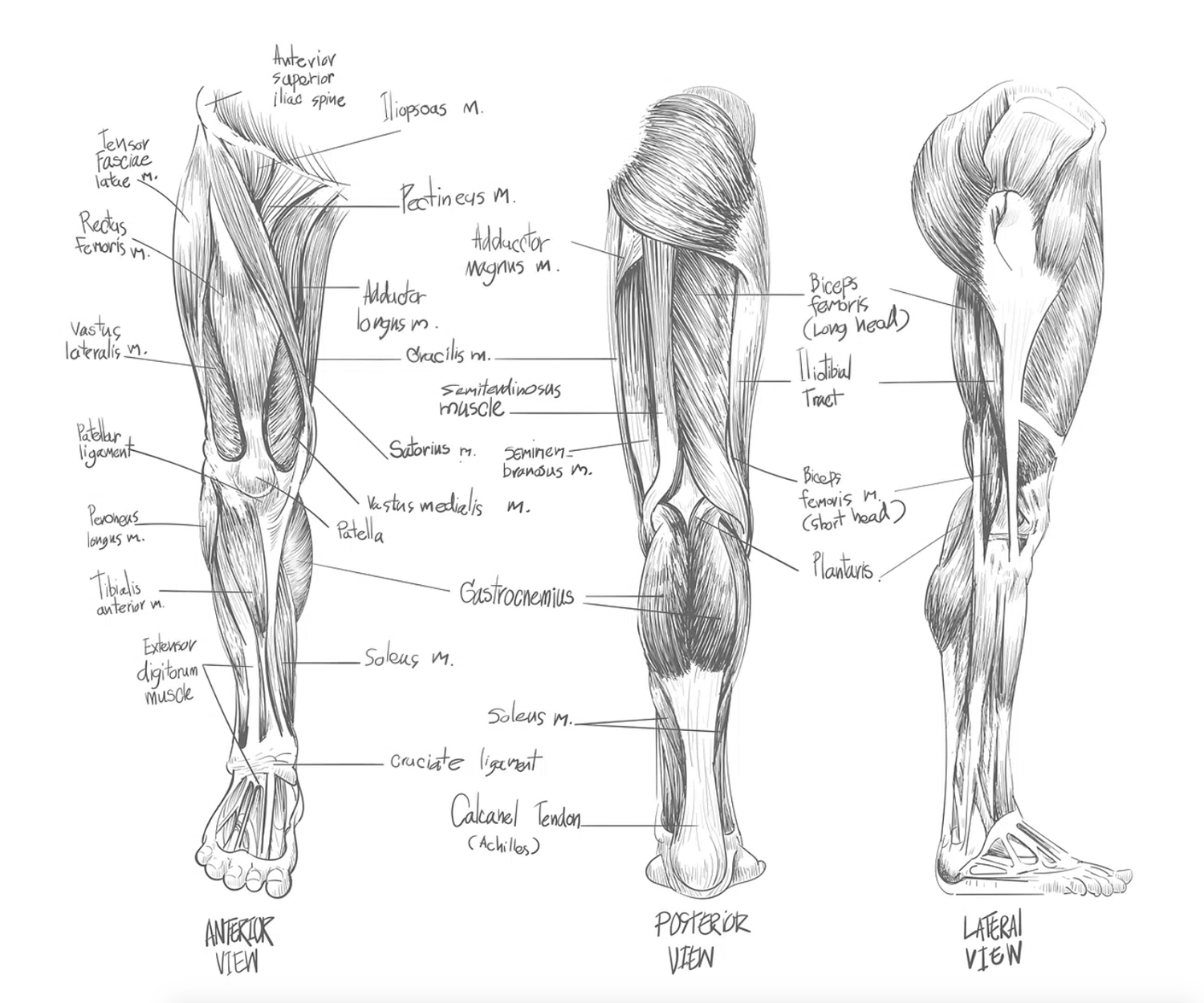
And here’s where the rubber meets the road: joint stacking. Start with this: the feet themselves are an intense, very densely populated system of joints. If your feet articulate with the ground incorrectly, every joint above the articulation of the two surfaces (all the joints in the foot; ankle; knee; hip) is used improperly. And over the course of time, improper use causes overuse injuries, which then escalate into larger joint issues or make one prone to injury. Based upon how you use your feet, foot, ankle, knee and hip issues can be very well predicted in advance. And much of it is permanently fixable with simple mechanical corrections through proper use and exercise. For instance, a person with a weak gluteus medius (one of the muscles on your fantastic posterior which offers great alignment assistance to the upper leg at the hip) will likely regularly twist the ankle on that leg. Let’s break it down it a little bit.
There are six different kinds of synovial joints in the body that allow us to move the body. Each of these types of joints offer specific kinds of motion. For instance, the knee allows us to bring our foot closer to or further from the derriere. The knee joint is designed to work in a single plane. The ankle and hip, however, circumnavigate, which means they offer circular motion. If you’d like a very good understanding of this, stand up and make a big circle with your knee. Or remain seated and make a circle with your toe. Notice how much motion they offer both your foot and your leg. Now bring one foot closer to your bum behind you. Notice that the knee joint provides for motion in a single plane. When or if the knee changes planes, it does so because the hip joint circumnavigates.
Nature, in its infinite wisdom, designed the human form with the capacity for fluid and rather limitless motion (within degrees, of course). Think of the ballet dancer or the pro sports person. Now think about a tortoise. Take in the gravity of how much more motion, range of motion, speed, flexibility is possible with a human body as compared to a tortoise.

And here’s where it gets tricky. You have a joint designed to work in a single plane placed between two joints that are designed to work in several planes. This set up offers maximum stability while affording maximum flexibility of motion. Exactly because the ankle and hip can be used in so many different planes, while the knee is optimally designed to operate in one is also the root of many LE issues. I have yet to meet a single person with an LE issue who was without improper mechanical use of the lower limbs. The joints of the body withstand gravity and life with MUCH greater health when those joints are utilized correctly.
Let’s fix some stuff! In order to rehab any part of the body, one must be willing to pay attention to how that part of the body is used. The other requirement is strengthening that which is too weak to maintain correct alignment. The below will help you begin to analyze how you use your lower body, which will also begin to help you use it more along the lines for which is was designed. We’ll begin with making some observations while you stand. And realize, it will take some time for you to really take in how you use your lower limbs, especially as it comes to walking, running, biking, etc. We are so used to our lower extremities, we don’t stop and check them out. And remember, the below only focuses on what is happening during standing still.
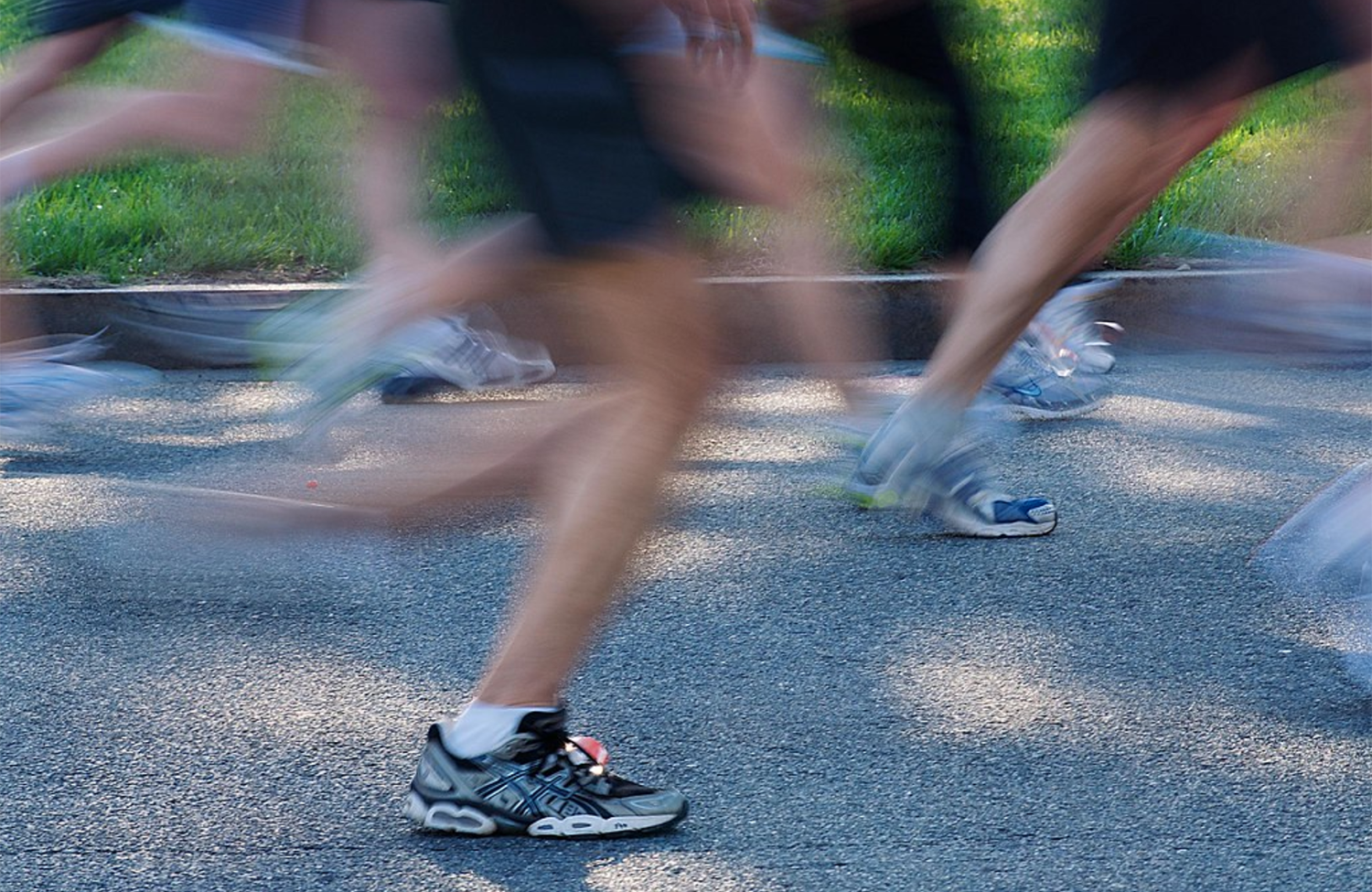
Analyzing the feet:
For the moment, please just stand up. In other words, do not arrange yourself. You need to literally become aware of what your native postural habits are. While standing bare foot, ponder the following:
- without looking, take a moment to feel the direction that your feet point. Now, look down and see if the direction your feet are pointing is the direction you ‘see’ in your head. When I say, ‘where are your feet pointed?’, draw an imaginary line from the center of your ankle to roughly a point between the great and second toe where those two toes meet the ball of the foot.
- feel how your feet meet the floor. Notice if the weight is predominantly placed on the inside or outside ‘edge’ of the feet. Notice if how your feet meet the floor is different for each foot. If the weight is consistently on the outside ‘edge’ of the feet, the muscles on the outside of the ankle will most likely be week; if on the inside ‘edge’, the muscles on the inside of the ankle will most likely be weak.
- is the weight more displaced toward the toe or heel? Weight consistently placed towards the toe can be contributing factor in low back pain.
- are you staying off of a certain portion of your foot/or feet because it causes pain or discomfort? Are you using your feet in a specific manner because a joint above them is painful?
- take a moment to ascertain how ‘hard’ the toes are working. Are you gripping the ground with your toes? If the ends of your toes are relieved of their color because of pressure, you’re probably using them a bit too much!
Most commonly, feet do not point straight ahead. People are generally pigeon-toed or duck-footed (more common). Generally with age, the preponderance of mal-placed feet rises. Keeping the toes open affords easier to maintain balance, which is the most likely cause that the occurrence of duck-footed-ness rises with age. However, being either pigeon-toed or duck-footed positions LE joints to take quite a beating, as well as engenders some critical weaknesses in the hip rotator group of muscles and at the ankles.
Analyzing the legs:
Once again, please just stand up (bare footed) without any ‘arrangement’ of the body.
- without looking, feel the direction you think your knees are pointed. Now look down and see if the actual direction and what you think are similar. When I say, ‘where are your knees pointing?’, find the center of the kneecap. Imagine your knees had a laser light built in and that light casts a laser directly straight out of the center of the kneecap.
- look at your feet and knees and determine if the knees and toes are pointed in the same direction.
What we are analyzing is the position of the leg between the ankle and hip. Perhaps your feet and kneecaps are well aligned, but those two body parts do not point as straight ahead as the rest of your body. Perhaps your feet are pointed straight ahead, but when you analyze the leg position between ankle and hip, what you see is a leg rotated either too close to the center line of the body or too far away from the center line of the body. The position of leg informs us of that either the internal rotators or external rotators of the femur (upper leg bone) are too weak to provide correct alignment.
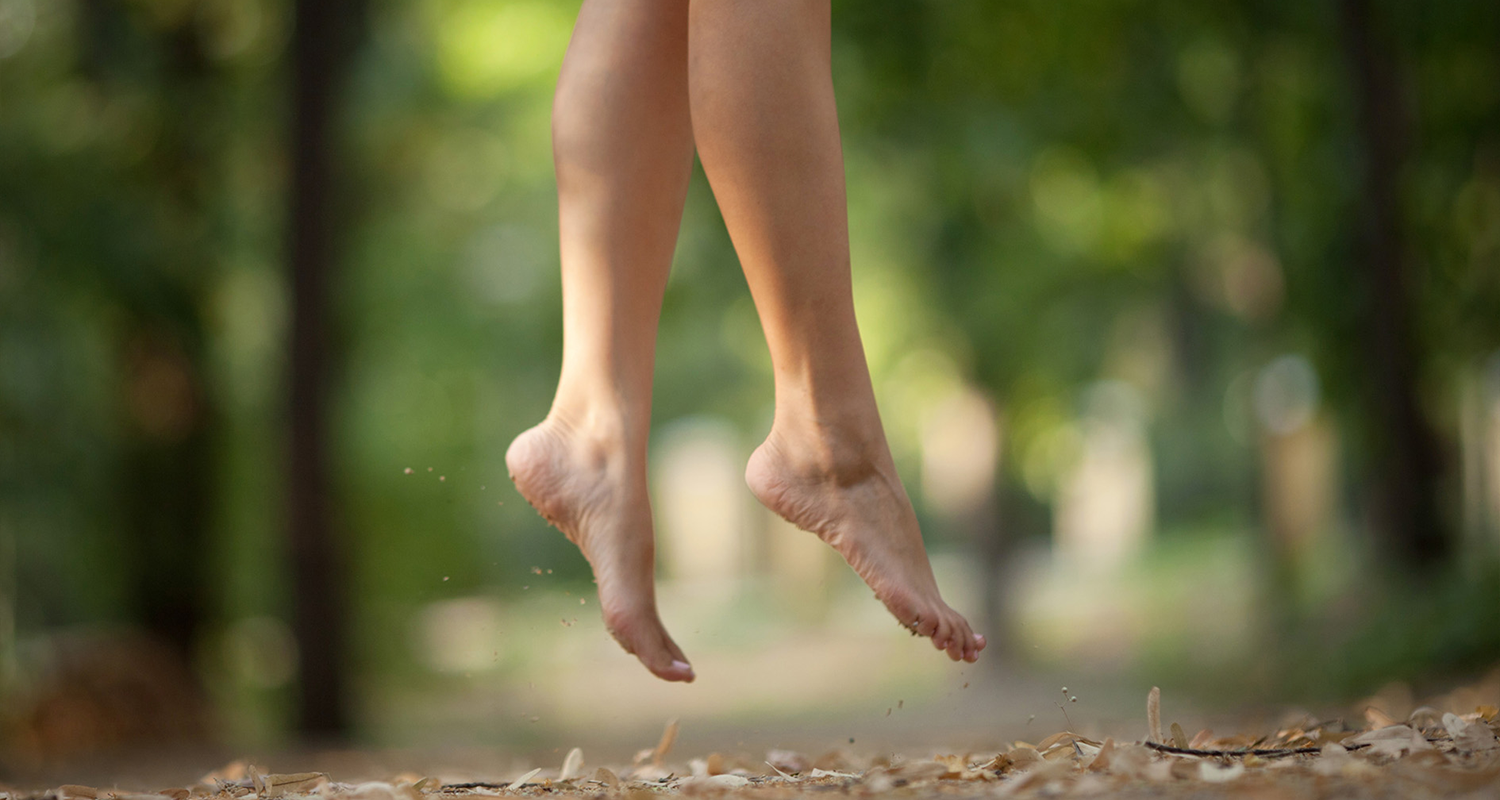
Ideally, what we should see when we look at a posturally correct form is this:
- shoulders squarely placed over a squarely placed pelvis.
- feet with evenly displaced weight that point straight ahead. If you drew lines straight out from the feet, those lines would be parallel to a third straight line drawn straight out from the center of the body.
- kneecaps that are oriented in the same direction as the feet, as well as being placed above the ankle. In other words, if I drew a straight line from the hip joint to the ankle, that straight line should roughly bisect the center of the kneecap. If the kneecap is poorly placed, we are informed that the gluteus medius is too weak.
You’ve heard that old adage: As above, so below. Basically, your two shoulders and two hips make up the four corners of your physical ‘universe’, and that ‘universe’ should be as close to a flat, right angled rectangle as possible. If you can look at your torso and see that one shoulder (or hip) is in front of (or behind) the rest of your body, then your ‘universe’ is literally twisted because your rectangle is not flat. If your shoulders do not sit directly above your pelvis, then your ‘universe’ is a Leaning Tower of Pisa because the corners do not have 90 degree angles. And very commonly, you see a blend of these two structural factors affecting someone’s ‘universe’. These structural factors affect all of the LE joints as well as spinal health. So, you can see gravity has an effect in two directions AND the feet really do reach the head!

Economy of motion occurs when the parts of our body are oriented in the same direction as the torso. If you really think about it, if your foot/knee/hip alignment is poor relative to your torso or your ‘universe’ is less then flat and square, you are literally headed in several directions at once. And how well do we really handle attempting to move in several directions at once? In order to achieve economy of motion, we have to strengthen weak muscles that prevent it. Additionally, economy of motion reduces wear to joints and literally provides a certain amount of injury protection.
Originally published in Agenda Magazine, February 2020